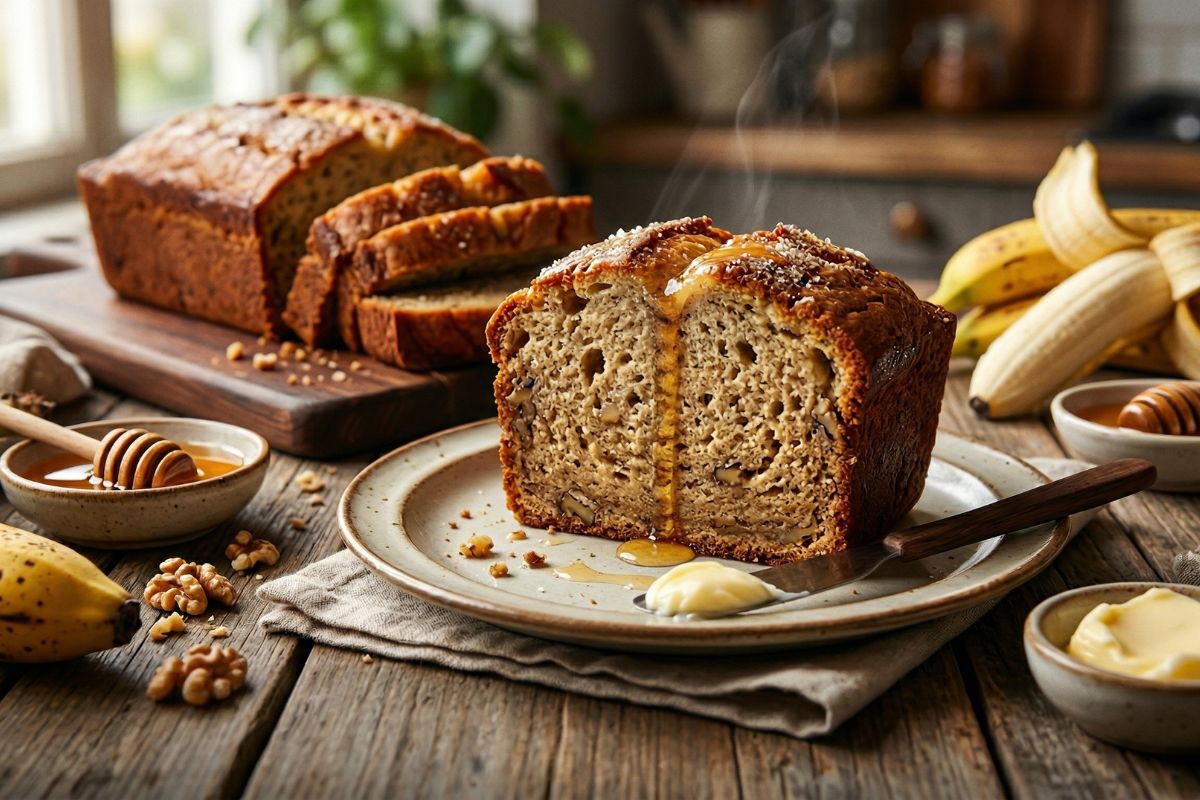
Banana Bread Recipe lovers, this easy and moist homemade delight is perfect for using ripe bananas and creating a soft, flavorful loaf. With simple ingredients and step-by-step guidance, this recipe guarantees bakery-quality results, making it ideal for beginners and experienced bakers alike.
Banana Bread Recipe (Overview Table)
| # | Detail | Description |
| 1 | Recipe Name | Banana Bread Recipe |
| 2 | Cuisine | American / Global |
| 3 | Course | Breakfast / Snack / Dessert |
| 4 | Difficulty Level | Easy |
| 5 | Preparation Time | 10–15 minutes |
| 6 | Cooking Time | 50–60 minutes |
| 7 | Total Time | Approximately 1 hour 10 minutes |
| 8 | Servings | 6–8 slices |
| 9 | Calories (per slice) | 180–250 kcal (approx.) |
| 10 | Key Ingredient | Ripe bananas |
| 11 | Additional Ingredients | Flour, sugar, eggs, butter, baking soda, vanilla |
| 12 | Flavor Profile | Sweet, moist, rich, slightly caramelized |
| 13 | Texture | Soft, fluffy, and tender crumb |
| 14 | Best Bananas to Use | Overripe bananas with brown spots |
| 15 | Baking Temperature | 175°C (350°F) |
| 16 | Baking Pan Type | Loaf pan (8×4 or 9×5 inch) |
| 17 | Optional Add-ins | Chocolate chips, nuts, walnuts, raisins |
| 18 | Storage Method | Airtight container at room temperature (2–3 days) |
| 19 | Freezing Option | Yes, freeze up to 2–3 months |
| 20 | Best Serving Suggestion | Serve warm with butter, honey, or coffee |
Banana Bread Ingredients
- Ripe bananas (3–4 medium): Use overripe bananas with brown spots for natural sweetness and moisture.
- All-purpose flour (1½–2 cups): Provides structure and a soft, tender crumb.
- Granulated sugar (¾–1 cup): Adds sweetness and helps with browning.
- Brown sugar (¼ cup, optional): Enhances flavor with a rich, caramel-like taste.
- Unsalted butter (½ cup, melted): Adds richness and keeps the bread moist.
- Eggs (2 large): Bind ingredients together and give structure.
- Baking soda (1 teaspoon): Helps the bread rise and become fluffy.
- Salt (½ teaspoon): Balances sweetness and enhances overall flavor.
- Vanilla extract (1–2 teaspoons): Adds depth and aroma.
- Milk or buttermilk (2–4 tablespoons): Improves texture and moisture.
- Yogurt or sour cream (¼ cup, optional): Makes the bread extra soft and moist.
- Cinnamon powder (½–1 teaspoon): Adds warm, spicy notes.
- Nutmeg (a pinch, optional): Enhances the flavor profile subtly.
- Chopped walnuts or pecans (½ cup): Adds crunch and nutty richness.
- Chocolate chips (½ cup, optional): Provides a sweet, indulgent twist.
- Honey or maple syrup (2–3 tablespoons, optional): Natural sweeteners for added flavor.
- Vegetable oil (¼ cup, optional alternative to butter): Keeps the bread moist for longer.
- Whole wheat flour (optional substitute): For a healthier, fiber-rich version.
- Oats (¼ cup, optional): Adds texture and nutritional value.
- Raisins or dried fruits (¼ cup, optional): Introduces natural sweetness and chewiness.
Step-by-Step Instructions for Making Banana Bread
- Preheat the oven: Set your oven to 175°C (350°F) and allow it to fully preheat for even baking results.
- Prepare the loaf pan: Grease an 8×4 or 9×5 inch loaf pan with butter or line it with parchment paper to prevent sticking.
- Mash the bananas: In a large mixing bowl, mash 3–4 ripe bananas using a fork until smooth with a few small lumps for texture.
- Add melted butter: Pour in melted butter and mix thoroughly with the mashed bananas to create a rich, moist base.
- Incorporate sugar: Add granulated sugar (and brown sugar if using) and mix well until fully combined.
- Mix in eggs: Add eggs one at a time, whisking well after each addition to ensure a smooth batter.
- Add vanilla extract: Stir in vanilla extract to enhance the aroma and overall flavor.
- Combine dry ingredients separately: In another bowl, whisk together flour, baking soda, salt, and optional spices like cinnamon.
- Fold dry into wet ingredients: Gradually add the dry mixture into the wet mixture, gently folding to avoid overmixing.
- Add milk or yogurt: Mix in milk, buttermilk, or yogurt to improve moisture and softness.
- Incorporate add-ins: Fold in optional ingredients like chocolate chips, nuts, or raisins for extra texture and flavor.
- Check batter consistency: Ensure the batter is thick but pourable; avoid overmixing to keep the bread tender.
- Pour into pan: Transfer the batter evenly into the prepared loaf pan and smooth the top.
- Optional topping: Sprinkle extra nuts, oats, or chocolate chips on top for a bakery-style finish.
- Bake the bread: Place in the oven and bake for 50–60 minutes until golden brown.
- Test for doneness: Insert a toothpick into the center; if it comes out clean, the bread is ready.
- Cool in pan: Let the banana bread cool in the pan for 10–15 minutes before removing.
- Transfer to rack: Move the bread to a wire rack to cool completely for best texture.
- Slice properly: Use a sharp knife to cut even slices once the bread has cooled.
- Serve and enjoy: Serve warm or at room temperature with butter, honey, or your favorite spread for the best experience.
Nutrition Facts for Banana Bread
| # | Nutrient | Amount per Serving | % Daily Value* |
| 1 | Calories | 200–250 kcal | 10–13% |
| 2 | Total Fat | 8–10 g | 12–15% |
| 3 | Saturated Fat | 4–5 g | 20–25% |
| 4 | Trans Fat | 0 g | 0% |
| 5 | Cholesterol | 30–50 mg | 10–15% |
| 6 | Sodium | 150–250 mg | 6–10% |
| 7 | Total Carbohydrates | 30–35 g | 10–12% |
| 8 | Dietary Fiber | 1–2 g | 4–8% |
| 9 | Total Sugars | 15–20 g | — |
| 10 | Added Sugars | 10–15 g | 20–30% |
| 11 | Protein | 3–4 g | 6–8% |
| 12 | Vitamin A | 50–80 IU | 1–2% |
| 13 | Vitamin C | 2–4 mg | 3–5% |
| 14 | Calcium | 20–40 mg | 2–4% |
| 15 | Iron | 1–1.5 mg | 6–8% |
| 16 | Potassium | 150–250 mg | 4–6% |
| 17 | Magnesium | 15–25 mg | 4–6% |
| 18 | Phosphorus | 40–60 mg | 4–6% |
| 19 | Folate (Vitamin B9) | 20–40 mcg | 5–10% |
| 20 | Vitamin B6 | 0.1–0.2 mg | 5–10% |
Banana Bread Substitutions
- All-purpose flour → Whole wheat flour: Adds fiber and a slightly nutty flavor for a healthier loaf.
- All-purpose flour → Almond flour: Great for a gluten-free, low-carb banana bread.
- Sugar → Honey: Natural sweetener that adds moisture and depth of flavor.
- Sugar → Maple syrup: Provides a rich, caramel-like sweetness.
- Sugar → Coconut sugar: Lower glycemic option with a mild caramel taste.
- Butter → Vegetable oil: Keeps banana bread softer and moist for longer.
- Butter → Coconut oil: Adds a subtle coconut flavor and healthy fats.
- Butter → Applesauce: Reduces fat while maintaining moisture and softness.
- Eggs → Flax eggs (1 tbsp flax + 3 tbsp water): Ideal vegan alternative with binding properties.
- Eggs → Mashed banana: Enhances banana flavor while acting as a binder.
- Eggs → Yogurt: Adds moisture and helps create a soft texture.
- Milk → Almond milk: Dairy-free option with a mild nutty taste.
- Milk → Oat milk: Creamy texture, perfect for vegan baking.
- Milk → Coconut milk: Adds richness and a slight tropical flavor.
- Baking soda → Baking powder: Use 3x quantity if substituting, though texture may vary slightly.
- Vanilla extract → Almond extract: Adds a stronger, nutty aroma.
- Chocolate chips → Cacao nibs: Healthier, less sweet chocolate alternative.
- Nuts → Seeds (sunflower/pumpkin): Great for nut-free diets with added crunch.
- Flour → Oat flour: Gluten-free option with a soft, hearty texture.
- Raisins → Dried cranberries or dates: Adds natural sweetness with a chewy texture.
Tips for Making Banana Bread
- Use overripe bananas: The darker the peel, the sweeter and more flavorful your banana bread will be.
- Measure ingredients accurately: Use proper measuring cups to maintain the right balance.
- Do not overmix the batter: Overmixing leads to dense, tough bread instead of a soft crumb.
- Preheat the oven fully: Ensures even baking and proper rise.
- Choose the right pan size: An 8×4 or 9×5 inch loaf pan works best for even baking.
- Grease or line the pan: Prevents sticking and makes removal easier.
- Use room temperature ingredients: Helps create a smooth, well-mixed batter.
- Mash bananas properly: Keep them mostly smooth with slight texture for better consistency.
- Add a pinch of salt: Enhances sweetness and balances flavors.
- Incorporate brown sugar: Adds moisture and a deeper caramel flavor.
- Use butter for richness: It enhances taste compared to oil.
- Add yogurt or sour cream: Makes the bread extra moist and tender.
- Sift dry ingredients: Prevents lumps and ensures even distribution.
- Fold gently: Always fold dry ingredients into wet to keep the batter light.
- Check batter thickness: It should be thick but pourable, not runny.
- Add mix-ins carefully: Coat nuts or chocolate chips with flour to prevent sinking.
- Do not overfill the pan: Fill only ¾ of the pan to allow space for rising.
- Tap the pan lightly: Removes air bubbles before baking.
- Bake on the center rack: Ensures even heat distribution.
- Avoid opening the oven early: Prevents the bread from collapsing.
- Test with a toothpick: Insert in the center; it should come out clean when done.
- Cool before slicing: Allows the bread to set and prevents crumbling.
- Use a serrated knife: Gives clean, even slices.
- Store properly: Keep in an airtight container to maintain freshness.
- Enhance flavor overnight: Banana bread often tastes better the next day as flavors develop.
How to Store Banana Bread
| # | Storage Method | Instructions | Duration | Pro Tip |
| 1 | Room Temperature | Wrap in plastic wrap or foil and keep in a cool, dry place | 2–3 days | Keep away from direct sunlight |
| 2 | Airtight Container | Store in a sealed container to prevent drying | 3 days | Line with paper towel to absorb moisture |
| 3 | Refrigeration | Place in airtight container or wrap tightly | 5–7 days | Warm before serving for best taste |
| 4 | Freezing (Whole Loaf) | Wrap in plastic + foil, then freeze | 2–3 months | Label with date before freezing |
| 5 | Freezing (Slices) | Slice first, wrap individually, then freeze | 2–3 months | Easy grab-and-go portions |
| 6 | Paper Towel Method | Wrap bread with paper towel inside container | 3–4 days | Prevents sogginess |
| 7 | Ziplock Bag | Store in a sealed ziplock bag | 2–3 days | Remove excess air before sealing |
| 8 | Vacuum Sealing | Seal using vacuum pack for freshness | Up to 1 week (fridge) | Extends shelf life significantly |
| 9 | Foil Wrapping | Wrap tightly in aluminum foil | 2–3 days | Keeps moisture locked in |
| 10 | Plastic Wrap | Wrap tightly to avoid air exposure | 2–3 days | Double wrap for better results |
| 11 | Bread Box | Store in a bread box at room temp | 2–3 days | Ensure box is dry and clean |
| 12 | Freezer Bags | Use heavy-duty freezer bags for freezing | 2–3 months | Prevents freezer burn |
| 13 | Thawing Method | Thaw at room temperature or microwave | — | Do not unwrap while thawing |
| 14 | Refrigerate Sliced Bread | Store slices in airtight container | 5–6 days | Separate layers with parchment paper |
| 15 | Avoid Humidity | Keep away from humid environments | — | Prevents mold growth |
| 16 | Add Moisture Control | Place silica gel or dry paper towel nearby | — | Helps extend freshness |
| 17 | Reheat Before Serving | Microwave or oven heat for 10–15 sec | — | Restores softness |
| 18 | Store with Butter Paper | Wrap in butter paper before container | 3–4 days | Adds extra protection |
| 19 | Avoid Open Air | Never leave uncovered | — | Leads to dryness and staleness |
| 20 | Check for Freshness | Look for mold or smell before consuming | — | Discard if spoiled |
What Is Banana Bread?
Banana bread is a moist, sweet quick bread made using ripe bananas, flour, sugar, eggs, and baking soda. Unlike traditional yeast breads, it rises without yeast, resulting in a soft, tender texture and rich flavor loved worldwide.
This classic homemade treat is popular as a breakfast, snack, or dessert due to its simplicity and versatility. Banana bread can be customized with nuts, chocolate chips, or spices, making it a timeless favorite for both beginner and experienced bakers.
Health Benefits of Banana Bread
- Rich in energy: Provides quick energy from natural sugars and carbohydrates.
- Contains potassium: Bananas support heart health and regulate blood pressure.
- Good source of fiber: Aids digestion and promotes gut health.
- Supports muscle function: Potassium helps prevent muscle cramps.
- Boosts mood: Bananas contain tryptophan, which supports serotonin production.
- Improves digestion: Fiber helps maintain regular bowel movements.
- Provides essential vitamins: Includes Vitamin B6, Vitamin C, and folate.
- Heart-friendly: When made with healthy fats, supports cardiovascular health.
- Natural sweetness: Reduces the need for excessive refined sugar.
- Can be made healthier: Easy to adapt with whole grains and low-sugar options.
- Supports brain health: Vitamin B6 helps improve cognitive function.
- Aids weight management: Keeps you fuller for longer when made with fiber-rich ingredients.
- Good for bone health: Contains minerals like magnesium and phosphorus.
- Provides antioxidants: Bananas contain compounds that fight oxidative stress.
- Helps regulate blood sugar: Especially when made with whole wheat flour.
- Improves metabolism: B vitamins help convert food into energy.
- Supports immunity: Vitamin C contributes to immune defense.
- Hydration support: Bananas contain water and electrolytes.
- Good pre-workout snack: Provides sustained energy for workouts.
- Can be dairy-free: Suitable for lactose-intolerant individuals with substitutions.
- Can be gluten-free: Adaptable using alternative flours.
- Supports skin health: Vitamins and antioxidants improve skin quality.
- Helps reduce food waste: Uses overripe bananas effectively.
- Customizable nutrition: Add nuts or seeds for extra protein and healthy fats.
- Satisfies cravings: Healthier alternative to processed desserts.
- Supports gut health: Fiber promotes healthy gut bacteria.
- Improves satiety: Keeps hunger levels in check.
- Low in sodium: Helps maintain healthy blood pressure levels.
- Suitable for all ages: Easy to digest and widely enjoyed.
- Balanced snack option: Combines carbs, fats, and nutrients for sustained energy.
Side Effects of Eating Banana Bread
- High sugar content: Excess intake may lead to blood sugar spikes.
- Calorie-dense: Overeating can contribute to weight gain.
- Refined flour impact: May cause blood sugar fluctuations.
- Low fiber (if refined): Can affect digestion when not made with whole grains.
- Overconsumption risk: Eating too much may lead to calorie surplus.
- Added fats: Butter and oil can increase saturated fat intake.
- Cholesterol concerns: Recipes with eggs and butter may raise cholesterol levels.
- Not ideal for diabetics: Requires moderation due to sugar content.
- Possible gluten sensitivity: Contains wheat flour unless substituted.
- Allergy risks: Nuts or dairy may trigger allergic reactions.
- Artificial additives: Some recipes may include processed ingredients.
- Digestive discomfort: Excess intake may cause bloating.
- Tooth decay risk: Sugar can contribute to dental issues.
- Low protein content: Not a complete meal replacement.
- High carb content: May not suit low-carb diets.
- Overly sweet versions: Can lead to sugar cravings.
- Portion control needed: Easy to overeat due to taste.
- Oil-heavy recipes: May increase unhealthy fat consumption.
- Shelf-life concerns: Spoiled bread can cause food poisoning.
- Preservatives (store-bought): May contain unhealthy additives.
- Blood sugar spikes: Especially when eaten on an empty stomach.
- Not suitable for keto diets: High carbohydrate content.
- Can trigger acidity: In some individuals with sensitive stomachs.
- Excess potassium (rare): Overconsumption of bananas may affect certain conditions.
- Weight management issues: Frequent intake may hinder fitness goals.
- Reduced nutrient density: Compared to whole fruits and grains.
- May cause sluggishness: High-carb foods can lead to energy crashes.
- Imbalanced diet risk: Relying too much on baked goods reduces dietary variety.
- Hidden calories: Add-ins like chocolate chips increase calorie count.
- Moderation required: Best consumed as an occasional treat rather than daily staple.
Banana Bread Recipe Notes
| # | Note | Description |
| 1 | Use Overripe Bananas | The riper the bananas, the sweeter and more flavorful the bread. |
| 2 | Measure Ingredients Correctly | Accurate measurements ensure perfect texture and consistency. |
| 3 | Do Not Overmix | Overmixing results in dense and tough banana bread. |
| 4 | Preheat Oven Properly | Ensures even baking and proper rise. |
| 5 | Choose the Right Pan | Use an 8×4 or 9×5 inch loaf pan for best results. |
| 6 | Grease or Line Pan | Prevents sticking and makes removal easier. |
| 7 | Room Temperature Ingredients | Helps create a smoother batter. |
| 8 | Adjust Sugar Levels | Modify sweetness based on banana ripeness. |
| 9 | Use Fresh Baking Soda | Ensures proper rise and fluffy texture. |
| 10 | Add Moisture Boosters | Yogurt or sour cream improves softness. |
| 11 | Flavor Enhancers | Add cinnamon or vanilla for better aroma. |
| 12 | Customize Add-ins | Include nuts, chocolate chips, or dried fruits. |
| 13 | Check Batter Consistency | Should be thick but easy to pour. |
| 14 | Do Not Overfill Pan | Fill only ¾ to avoid overflow. |
| 15 | Bake on Center Rack | Promotes even heat distribution. |
| 16 | Avoid Opening Oven Early | Prevents collapse during baking. |
| 17 | Test for Doneness | Use a toothpick to check if fully baked. |
| 18 | Cool Before Slicing | Allows structure to set and prevents crumbling. |
| 19 | Storage Matters | Store properly to maintain freshness. |
| 20 | Flavor Improves Over Time | Banana bread tastes even better the next day. |
Conclusion on Banana Bread Recipe
Banana Bread Recipe is a timeless, easy-to-make treat that transforms ripe bananas into a moist, flavorful loaf. With simple ingredients and versatile variations, it suits every taste, making it perfect for breakfast, snacks, or dessert at any time.
This homemade banana bread delivers comfort, nutrition, and rich taste in every bite. By following the right techniques and tips, you can achieve bakery-quality results consistently, making it a go-to recipe for beginners and experienced bakers alike.
FAQs About Banana Bread Recipe
Using overripe bananas, the right amount of fat (butter or oil), and not overmixing the batter ensures a moist and soft banana bread texture.
Yes, you can replace eggs with flaxseed mixture, yogurt, or mashed bananas for a vegan-friendly banana bread.
Bananas should be very ripe with brown or black spots, as they are sweeter and easier to mash, enhancing flavor.
Overmixing the batter or using too much flour can make banana bread dense instead of light and fluffy.
Yes, whole wheat flour can be used for a healthier version, though it may make the bread slightly denser.
Typically, banana bread bakes at 175°C (350°F) for 50–60 minutes, depending on your oven and pan size.
Insert a toothpick into the center; if it comes out clean or with a few crumbs, the bread is fully baked.
Yes, banana bread freezes well for up to 2–3 months when wrapped properly in plastic and foil.
Store it in an airtight container at room temperature for 2–3 days or refrigerate for up to a week.
Absolutely, adding chocolate chips, walnuts, or raisins enhances flavor, texture, and overall taste.