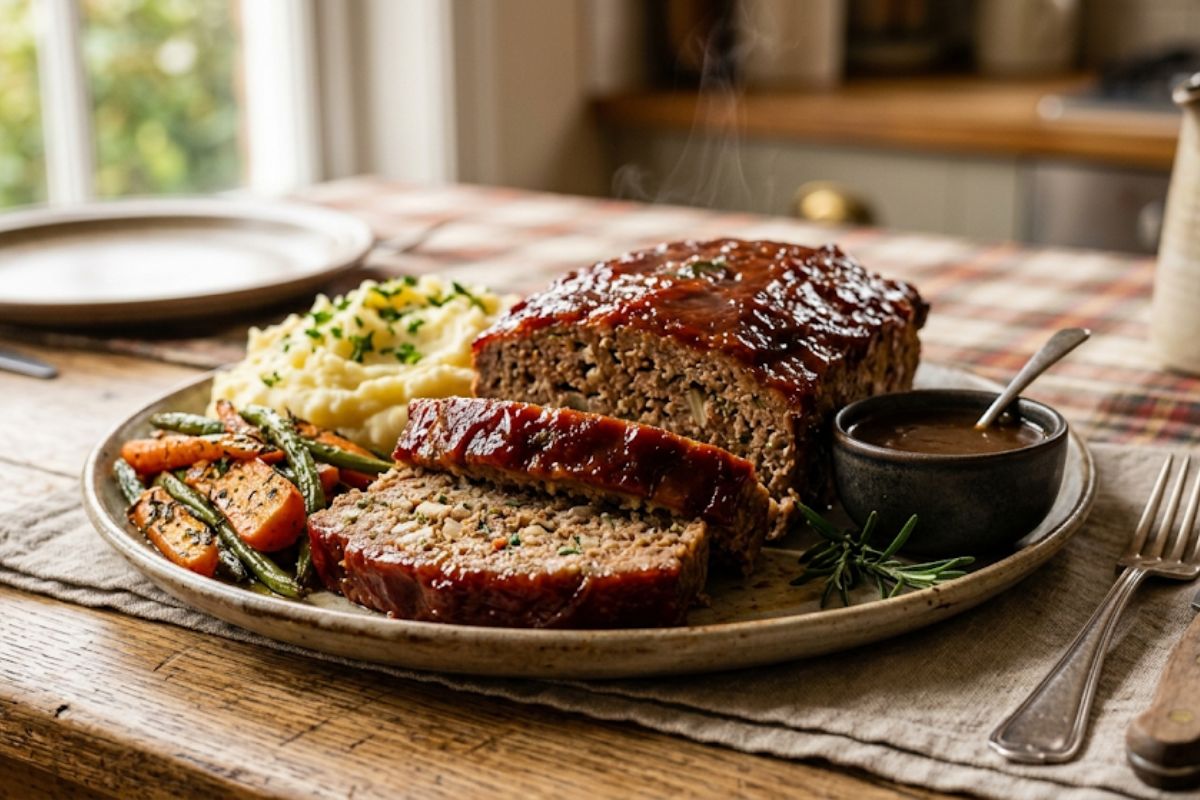
Meatloaf Recipe lovers know the perfect balance of flavor, texture, and comfort can turn a simple dish into a family favorite. This easy, juicy, and perfectly seasoned meatloaf delivers classic taste with modern appeal, making it an irresistible choice for weeknight dinners or special gatherings.
Meatloaf Recipe (Overview Table)
| Attribute | Details |
| Recipe Name | Meatloaf Recipe |
| Cuisine | American |
| Dish Type | Main Course |
| Difficulty Level | Easy to Moderate |
| Preparation Time | 15–20 minutes |
| Cooking Time | 50–60 minutes |
| Total Time | लगभग 1 hour 15 minutes |
| Servings | 4–6 लोगों के लिए |
| Calories per Serving | 250–350 kcal (approx.) |
| Main Ingredient | Ground beef (or mixed meat) |
| Optional Meats | Pork, turkey, chicken |
| Key Seasonings | Salt, pepper, garlic, onion |
| Binding Agents | Eggs, breadcrumbs |
| Flavor Enhancers | Worcestershire sauce, ketchup |
| Texture | Juicy, tender, firm sliceable |
| Cooking Method | Baking |
| Ideal Oven Temperature | 175°C / 350°F |
| Internal Temperature | 70°C / 160°F (safe to eat) |
| Best Side Dishes | Mashed potatoes, veggies |
| Storage | Refrigerate up to 3–4 days |
| Freezing Option | Yes, up to 2–3 months |
Meatloaf Ingredients
- Ground beef (80/20 ratio) for the perfect balance of flavor and juiciness
- Ground pork (optional) to enhance richness and tenderness
- Breadcrumbs or panko for binding and structure
- Eggs to hold the meatloaf mixture together
- Finely chopped onion for moisture and flavor depth
- Minced garlic to add a bold, aromatic taste
- Milk to keep the meatloaf soft and juicy
- Worcestershire sauce for a savory umami boost
- Ketchup for a slightly sweet and tangy flavor
- Dijon or yellow mustard for subtle sharpness
- Salt to enhance overall flavor
- Black pepper for mild heat and seasoning
- Fresh parsley (chopped) for freshness and color
- Dried herbs like thyme or oregano for added aroma
- Paprika for a smoky, mildly sweet flavor
- Brown sugar (optional) for a hint of sweetness in the glaze
- Tomato paste to deepen the flavor profile
- Olive oil or butter for sautéing onions and garlic
- Red chili flakes (optional) for a slight spicy kick
- BBQ sauce (optional) for a smoky, tangy glaze variation
Step-by-Step Instructions for Making Meatloaf
- Preheat your oven to 175°C (350°F) and lightly grease a baking dish or line it with parchment paper for easy cleanup.
- Finely chop the onion and mince the garlic, then sauté them in a little olive oil until soft and fragrant to enhance flavor.
- In a large mixing bowl, combine ground beef (and pork if using) with breadcrumbs, ensuring an even base for the meatloaf mixture.
- Add eggs and milk to the mixture, which will help bind the ingredients and keep the meatloaf moist.
- Mix in sautéed onions, garlic, Worcestershire sauce, ketchup, mustard, salt, pepper, and your choice of herbs and spices.
- Gently combine all ingredients using your hands or a spatula, being careful not to overmix as it can make the meatloaf dense.
- Transfer the mixture to the prepared baking dish and shape it into a loaf, ensuring it is evenly formed for consistent cooking.
- In a small bowl, prepare the glaze by mixing ketchup, a bit of brown sugar, and mustard for a sweet and tangy topping.
- Spread the glaze evenly over the top of the meatloaf to lock in moisture and add a rich flavor layer.
- Place the meatloaf in the preheated oven and bake for about 50–60 minutes.
- Check the internal temperature using a meat thermometer; it should reach 70°C (160°F) for safe consumption.
- If needed, broil for 2–3 minutes at the end to caramelize the glaze and enhance texture.
- Remove the meatloaf from the oven and let it rest for 10 minutes to retain juices and improve slicing.
- Carefully slice the meatloaf into even portions using a sharp knife.
- Serve hot with classic sides like mashed potatoes, steamed vegetables, or a fresh salad for a complete meal.
Nutrition Facts for Meatloaf
| Nutrient | Amount (Per Serving ~1 slice) |
| Calories | 280–350 kcal |
| Protein | 18–25 g |
| Total Fat | 18–22 g |
| Saturated Fat | 6–9 g |
| Unsaturated Fat | 10–13 g |
| Cholesterol | 75–110 mg |
| Carbohydrates | 10–18 g |
| Dietary Fiber | 1–2 g |
| Sugars | 4–8 g |
| Sodium | 500–800 mg |
| Potassium | 300–450 mg |
| Iron | 2–3 mg |
| Calcium | 40–80 mg |
| Vitamin A | 150–300 IU |
| Vitamin C | 2–6 mg |
| Vitamin B12 | 1.5–2.5 mcg |
| Zinc | 3–5 mg |
| Magnesium | 20–35 mg |
| Phosphorus | 150–250 mg |
| Water Content | 55–65% |
Meatloaf Substitutions
- Swap ground beef with ground turkey for a leaner, lower-fat meatloaf
- Use ground chicken as a lighter, mild-flavored alternative
- Replace beef with ground pork for a richer and juicier texture
- Try plant-based ground meat for a vegetarian or vegan option
- Substitute breadcrumbs with oats for a healthier, fiber-rich binder
- Use crushed crackers instead of breadcrumbs for added flavor
- Replace breadcrumbs with almond flour for a low-carb version
- Use cooked rice or quinoa as a gluten-free binding option
- Swap eggs with flaxseed meal mixed with water for a vegan binder
- Use mashed potatoes instead of eggs for moisture and binding
- Replace milk with almond milk or oat milk for a dairy-free option
- Use Greek yogurt instead of milk for extra creaminess and protein
- Substitute ketchup with tomato paste for a richer, less sweet flavor
- Use BBQ sauce instead of ketchup for a smoky taste
- Replace Worcestershire sauce with soy sauce or tamari for umami flavor
- Use coconut aminos as a soy-free alternative to Worcestershire sauce
- Swap fresh onions with onion powder for convenience
- Use garlic powder instead of fresh garlic when needed
- Replace parsley with cilantro or basil for a different herb profile
- Add grated vegetables like zucchini or carrots instead of extra meat for moisture and nutrition
Tips for Making Meatloaf
- Use an 80/20 ground beef ratio to achieve the perfect balance of flavor and juiciness.
- Avoid overmixing the meat mixture, as it can result in a dense and tough meatloaf.
- Sauté onions and garlic before mixing to enhance sweetness and depth of flavor.
- Soak breadcrumbs in milk (panade) to keep the meatloaf tender and moist.
- Combine different meats like beef and pork for a richer taste profile.
- Always season generously to avoid a bland meatloaf.
- Add Worcestershire sauce for a deep, savory umami boost.
- Use fresh herbs for a brighter and more aromatic flavor.
- Shape the meatloaf evenly to ensure consistent cooking throughout.
- Do not pack the mixture too tightly; keep it slightly loose for better texture.
- Use parchment paper or foil for easy cleanup and lifting.
- Apply a glaze on top to lock in moisture and add a flavorful crust.
- Let the meatloaf rest for at least 10 minutes after baking to retain juices.
- Use a meat thermometer to ensure it reaches 70°C (160°F) internally.
- Bake on a rack or elevated surface to allow excess fat to drain away.
- Avoid excessive breadcrumbs, which can dry out the meatloaf.
- Add grated vegetables like carrots or zucchini for extra moisture.
- Taste-test seasoning by cooking a small portion before baking the whole loaf.
- Keep the oven temperature consistent at 175°C (350°F) for even cooking.
- Double the recipe and freeze one loaf for future meals.
- Use a loaf pan for a uniform shape or free-form for a crustier exterior.
- Brush extra glaze halfway through baking for enhanced flavor.
- Slice with a sharp knife to maintain clean, even portions.
- Pair with classic sides like mashed potatoes for a complete meal.
- Store leftovers properly in an airtight container to maintain freshness and taste.
How to Store Meatloaf
| Storage Method | Details |
| Cooling Before Storage | Allow meatloaf to cool at room temperature for 20–30 minutes before storing |
| Refrigeration Time | Store in the refrigerator within 2 hours of cooking |
| Refrigerator Shelf Life | Keeps fresh for 3–4 days when properly stored |
| Storage Container | Use airtight containers to prevent moisture loss and contamination |
| Wrapping Method | Wrap tightly in plastic wrap or aluminum foil before placing in a container |
| Sliced vs Whole | Store sliced portions for easy reheating or keep whole for better moisture retention |
| Moisture Retention | Add a little sauce or glaze before storing to prevent drying out |
| Temperature Setting | Keep refrigerator at or below 4°C (40°F) |
| Freezing Option | Meatloaf can be frozen for long-term storage |
| Freezer Shelf Life | Best used within 2–3 months for optimal flavor |
| Freezer Wrapping | Wrap in plastic wrap and then foil or use freezer-safe bags |
| Portioning | Slice before freezing for convenient single servings |
| Labeling | Always label with date to track freshness |
| Thawing Method | Thaw overnight in the refrigerator for best results |
| Quick Thawing | Use microwave defrost setting if short on time |
| Reheating in Oven | Reheat at 175°C (350°F) covered with foil to retain moisture |
| Reheating in Microwave | Heat in short intervals to avoid overcooking |
| Prevent Dryness | Add broth, sauce, or water before reheating |
| Avoid Re-Freezing | Do not refreeze once thawed to maintain quality and safety |
| Food Safety Tip | Discard if unusual smell, texture, or color develops |
What Is Meatloaf?
Meatloaf is a classic comfort food made by combining ground meat, breadcrumbs, eggs, and seasonings, then shaping the mixture into a loaf and baking it. Known for its rich flavor and tender texture, it is a staple in many households worldwide.
Traditionally associated with American cuisine, meatloaf is highly versatile and can be customized with different meats, spices, and glazes. It is often served with sides like mashed potatoes or vegetables, making it a hearty and satisfying meal option
Health Benefits of Meatloaf
- Rich source of high-quality protein essential for muscle growth and repair
- Provides essential amino acids needed for overall body function
- Supports muscle strength and recovery after physical activity
- Contains iron, which helps prevent anemia and boosts energy levels
- Good source of zinc for immune system support
- Provides vitamin B12, crucial for nerve function and red blood cell production
- Helps maintain healthy metabolism due to B-complex vitamins
- Offers sustained energy from its balanced protein and fat content
- Can be made healthier by using lean meats like turkey or chicken
- Supports bone health when prepared with calcium-rich ingredients
- Contains phosphorus, which aids in bone and teeth strength
- Helps in tissue repair and cell regeneration
- Can include vegetables for added fiber and nutrients
- Provides healthy fats when made with quality meat sources
- Helps keep you full longer, supporting weight management
- Can be customized for low-carb or keto diets
- Supports brain health through essential nutrients like B vitamins
- Helps regulate blood sugar when balanced with proper ingredients
- Can be gluten-free when using alternative binders
- Offers antioxidants when herbs and vegetables are added
- Supports heart health when made with lean meat and less sodium
- Provides magnesium, aiding in muscle and nerve function
- Helps improve satiety and reduce unnecessary snacking
- Can be part of a balanced diet when portion-controlled
- Supports immune health with nutrient-rich ingredients
- Provides hydration support when made with moisture-rich components
- Can be adapted for dairy-free or allergen-friendly diets
- Offers a balanced mix of macronutrients for overall wellness
- Helps in maintaining healthy skin through protein intake
- Easy to incorporate nutrient-dense ingredients for enhanced health benefits
Side Effects of Eating Meatloaf
- High saturated fat content may contribute to increased cholesterol levels
- Excess consumption can raise the risk of heart-related issues
- High sodium levels may lead to increased blood pressure
- Overeating can cause weight gain due to calorie density
- Processed ingredients may contain preservatives and additives
- Red meat-heavy versions may increase long-term health risks if overconsumed
- Can be difficult to digest for some individuals
- May cause bloating if consumed in large portions
- High protein intake may strain kidneys in sensitive individuals
- Some recipes may include added sugars in sauces or glazes
- Risk of foodborne illness if undercooked
- Overcooking can produce harmful compounds in meat
- May trigger allergies if containing gluten, eggs, or dairy
- High fat content can lead to digestive discomfort
- Frequent consumption may impact heart health negatively
- Can contribute to acid reflux in some people
- Lack of fiber in traditional recipes may affect digestion
- May lead to dehydration if high in sodium and low in fluids
- Certain additives may not suit sensitive individuals
- Overuse of processed sauces can increase sugar intake
- Can raise uric acid levels in some cases
- May not be suitable for strict vegetarian or vegan diets
- High calorie intake can affect weight management goals
- Excess intake may lead to sluggishness or fatigue
- Can impact blood sugar levels if paired with sugary sauces
- Greasy texture may cause nausea in some individuals
- Risk of contamination if not stored properly
- May contribute to unhealthy eating habits if consumed frequently
- High cholesterol content may affect cardiovascular health
- Imbalance in nutrients if not paired with vegetables or whole foods
Meatloaf Recipe Notes
| Note Category | Details |
| Meat Selection | Use 80/20 ground beef for best flavor and moisture balance |
| Meat Combination | Mixing beef and pork enhances taste and tenderness |
| Binding Technique | Always use eggs and breadcrumbs to hold the loaf together |
| Moisture Tip | Add milk or broth to prevent dryness |
| Flavor Base | Sauté onions and garlic before mixing for deeper flavor |
| Mixing Method | Mix gently to avoid a dense and tough texture |
| Seasoning Balance | Adjust salt and spices according to taste preference |
| Shape Consistency | Form an even loaf to ensure uniform cooking |
| Baking Option | Use a loaf pan or free-form on a baking tray |
| Glaze Tip | Apply glaze before and during baking for rich flavor |
| Temperature Control | Bake at 175°C (350°F) for even cooking |
| Doneness Check | Internal temperature should reach 70°C (160°F) |
| Resting Time | Let meatloaf rest for 10 minutes before slicing |
| Slicing Tip | Use a sharp knife for clean and even slices |
| Texture Enhancement | Add grated vegetables for extra moisture |
| Flavor Variations | Experiment with BBQ sauce, herbs, or spices |
| Storage Advice | Refrigerate leftovers in airtight containers |
| Freezing Tip | Wrap tightly and freeze for up to 3 months |
| Reheating Method | Reheat covered to retain moisture |
| Serving Suggestion | Pair with mashed potatoes or roasted vegetables for a complete meal |
Conclusion on Meatloaf Recipe
Meatloaf Recipe is a timeless comfort dish that combines simplicity, flavor, and versatility into one satisfying meal. With the right ingredients and techniques, you can create a juicy, tender loaf that suits any occasion, from everyday dinners to special family gatherings.
Whether you prefer a classic beef version or healthier variations, this Meatloaf Recipe can be easily customized to match your taste and dietary needs. Its rich taste, easy preparation, and nutritional value make it a reliable and delicious addition to any meal plan.
FAQs About Meatloaf Recipe
The best option is ground beef with an 80/20 fat ratio, as it provides the perfect balance of flavor and moisture. You can also combine beef with pork or turkey for added richness.
Using ingredients like eggs, milk, and breadcrumbs helps retain moisture. Avoid overmixing and overbaking, as both can make the meatloaf dry.
Yes, you can substitute breadcrumbs with oats, crushed crackers, almond flour, or cooked rice for similar binding and texture.
Meatloaf should be baked at 175°C (350°F) for even cooking and the best texture.
The internal temperature should reach 70°C (160°F). Using a meat thermometer ensures accuracy and food safety.
Yes, you can prepare the mixture in advance and store it in the refrigerator for up to 24 hours before baking.
Properly stored meatloaf can last 3–4 days in the refrigerator in an airtight container.
Yes, meatloaf freezes well. You can freeze it cooked or uncooked for up to 2–3 months when properly wrapped
Popular sides include mashed potatoes, roasted vegetables, green beans, and fresh salads for a balanced meal.
This usually happens due to a lack of binding ingredients like eggs or breadcrumbs, or if the loaf is sliced before resting after baking.