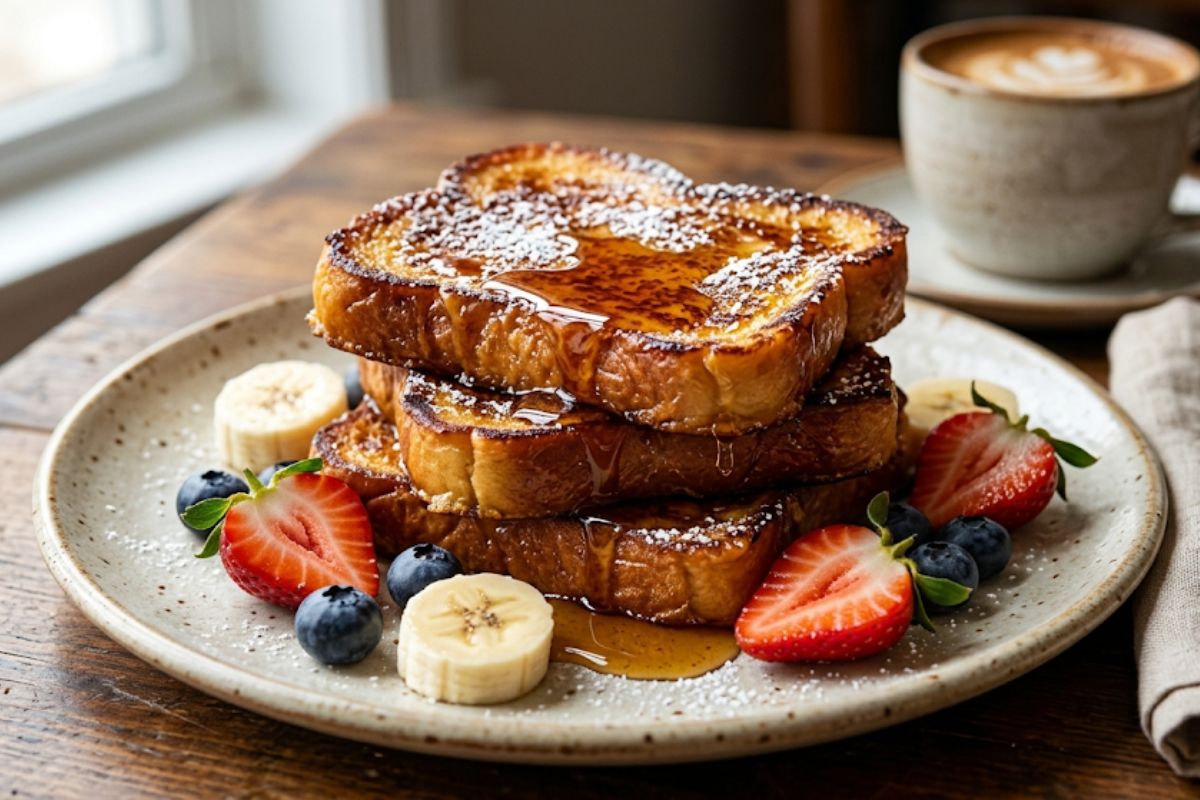
French Toast Recipe lovers, get ready to discover the ultimate way to create a perfectly golden, crispy-on-the-outside and soft-on-the-inside breakfast classic. This easy, foolproof guide combines rich flavors and simple ingredients to help you make restaurant-quality French toast right at home every time.
French Toast Recipe (Overview Table)
| Attribute | Details |
| Recipe Name | French Toast Recipe |
| Cuisine | French / American Breakfast |
| Dish Type | Sweet Breakfast / Brunch |
| Preparation Time | 10 minutes |
| Cooking Time | 10–15 minutes |
| Total Time | 20–25 minutes |
| Difficulty Level | Easy |
| Servings | 2–4 servings |
| Calories per Serving | Approx. 250–350 kcal |
| Key Ingredients | Bread, eggs, milk, sugar, cinnamon |
| Optional Ingredients | Vanilla extract, nutmeg, cream |
| Best Bread Type | Brioche, challah, or thick white bread |
| Cooking Method | Pan-fried on stovetop |
| Texture | Crispy outside, soft inside |
| Flavor Profile | Sweet, creamy, slightly spiced |
| Toppings | Maple syrup, fruits, powdered sugar |
| Dietary Variations | Dairy-free, gluten-free options available |
| Storage | Refrigerate up to 2 days |
| Reheating Method | Toast or pan heat for best texture |
| Best Served With | Coffee, juice, or fresh fruits |
French Toast Ingredients
- Thick slices of day-old bread (preferably brioche, challah, or white bread for best absorption)
- Fresh large eggs to create a rich custard base
- Whole milk for a creamy, smooth texture
- Heavy cream (optional) for extra richness and indulgence
- Granulated sugar to add balanced sweetness
- Brown sugar for a deeper, caramel-like flavor
- Pure vanilla extract for warm, aromatic notes
- Ground cinnamon to enhance the classic French toast flavor
- Ground nutmeg (optional) for subtle spice depth
- A pinch of salt to balance sweetness and enhance flavor
- Unsalted butter for frying and achieving a golden crust
- Maple syrup for serving and natural sweetness
- Powdered sugar for a light, decorative topping
- Fresh fruits like strawberries, blueberries, or bananas for freshness
- Honey as an alternative natural sweetener
- Whipped cream for a rich and creamy topping
- Orange zest (optional) for a refreshing citrus twist
- Almond extract (optional) for a nutty flavor variation
- Non-dairy milk (like almond or oat milk) for a vegan-friendly option
- Coconut oil or vegan butter as an alternative cooking fat
Step-by-Step Instructions for Making French Toast
- Begin by selecting thick, slightly stale slices of bread such as brioche or challah, as they absorb the custard better without becoming soggy.
- In a wide mixing bowl, crack fresh eggs and whisk them thoroughly until the yolks and whites are fully combined.
- Add milk (and optional cream) to the eggs, then whisk again to create a smooth, rich custard base.
- Mix in sugar, vanilla extract, ground cinnamon, a pinch of salt, and optional nutmeg for enhanced flavor.
- Preheat a non-stick skillet or griddle over medium heat to ensure even cooking.
- Add a small amount of butter to the pan and let it melt completely, coating the surface evenly.
- Dip each slice of bread into the custard mixture, allowing it to soak for a few seconds on each side without oversaturating.
- Lift the bread gently and let any excess custard drip off before placing it in the pan.
- Place the soaked bread slices onto the hot skillet, ensuring they are not overcrowded.
- Cook each slice for about 2–3 minutes on one side until it turns golden brown and slightly crispy.
- Flip the slices carefully using a spatula to avoid breaking them.
- Cook the other side for another 2–3 minutes until evenly browned and cooked through.
- Adjust heat if necessary to prevent burning while ensuring the inside cooks properly.
- Add more butter to the pan between batches for consistent flavor and texture.
- Repeat the process with the remaining bread slices until all are cooked.
- Transfer the cooked French toast to a plate and keep warm if serving multiple batches.
- Dust the toast lightly with powdered sugar for a classic finishing touch.
- Drizzle generously with maple syrup for sweetness and moisture.
- Top with fresh fruits, whipped cream, or nuts for added flavor and presentation.
- Serve immediately while hot and enjoy a perfectly crispy, soft, and flavorful French toast breakfast.
Nutrition Facts for French Toast
| Nutrient | Amount (Per Serving) |
| Calories | 300 kcal |
| Total Fat | 14 g |
| Saturated Fat | 6 g |
| Unsaturated Fat | 7 g |
| Trans Fat | 0.2 g |
| Cholesterol | 160 mg |
| Sodium | 320 mg |
| Total Carbohydrates | 32 g |
| Dietary Fiber | 2 g |
| Sugars | 10 g |
| Protein | 10 g |
| Calcium | 120 mg |
| Iron | 2 mg |
| Potassium | 180 mg |
| Vitamin A | 350 IU |
| Vitamin C | 1 mg |
| Vitamin D | 1.5 mcg |
| Vitamin B12 | 0.6 mcg |
| Magnesium | 20 mg |
| Phosphorus | 150 mg |
French Toast Substitutions
- Use whole wheat bread instead of white bread for a healthier, fiber-rich option
- Substitute brioche with challah or sandwich bread if unavailable
- Replace eggs with mashed bananas for a natural, vegan alternative
- Use flaxseed meal mixed with water as an egg substitute (flax egg)
- Swap dairy milk with almond milk, oat milk, or soy milk for lactose-free versions
- Replace heavy cream with coconut cream for a dairy-free richness
- Use honey or maple syrup instead of granulated sugar for natural sweetness
- Substitute brown sugar with coconut sugar for a lower glycemic option
- Use vanilla essence instead of pure vanilla extract if needed
- Replace cinnamon with pumpkin spice or cardamom for a flavor twist
- Use ghee instead of butter for a richer, nutty taste
- Substitute butter with coconut oil for a vegan cooking option
- Use gluten-free bread for those with gluten intolerance
- Replace powdered sugar topping with blended dates for a natural sweetener
- Use yogurt instead of milk for a tangy, creamy variation
- Swap regular bread with sourdough for a slightly tangy flavor profile
- Replace maple syrup with agave nectar for a vegan-friendly topping
- Use fresh fruit compote instead of syrup for a healthier topping choice
- Substitute nutmeg with allspice for a similar warm flavor
- Use protein-enriched bread or add protein powder to the batter for a high-protein version
Tips for Making French Toast
- Use slightly stale bread to absorb the custard without becoming soggy.
- Choose thick-cut slices like brioche or challah for the best texture.
- Always whisk the egg mixture thoroughly for a smooth, even coating.
- Add a splash of cream for a richer and more luxurious flavor.
- Don’t skip the pinch of salt—it enhances the overall taste.
- Let the bread soak just enough; avoid oversoaking to prevent breakage.
- Preheat the pan properly before adding the bread for even cooking.
- Cook on medium heat to avoid burning the outside while the inside stays undercooked.
- Use butter for a golden, flavorful crust.
- Add a little oil with butter to prevent burning.
- Avoid overcrowding the pan; cook in batches if necessary.
- Flip only once to maintain structure and crispiness.
- Press lightly with a spatula to ensure even contact with the pan.
- Keep cooked slices warm in a low-temperature oven while finishing batches.
- Add cinnamon and vanilla for classic, aromatic flavor.
- Experiment with spices like nutmeg or cardamom for variety.
- Use a non-stick pan or well-seasoned skillet for best results.
- Wipe and re-butter the pan between batches for consistent texture.
- Serve immediately for the best taste and crispness.
- Top with fresh fruits for added freshness and nutrition.
- Use real maple syrup instead of artificial syrups for better flavor.
- Dust with powdered sugar just before serving for presentation.
- Add a crunchy element like nuts for texture contrast.
- Try stuffing with cream cheese or fruits for a gourmet twist.
- Always taste and adjust sweetness in the batter before cooking.
How to Store French Toast
| Storage Method | Details |
| Room Temperature | Keep French toast at room temperature for up to 2 hours only |
| Cooling Before Storage | Allow toast to cool completely to prevent condensation |
| Short-Term Storage | Store in the refrigerator for up to 2–3 days |
| Airtight Container | Use an airtight container to maintain freshness |
| Layer Separation | Place parchment paper between slices to avoid sticking |
| Refrigeration Temperature | Keep at or below 4°C (40°F) for safety |
| Avoid Moisture | Ensure no excess moisture to prevent sogginess |
| Freezing Option | Freeze for long-term storage up to 2 months |
| Freezer Bags | Use zip-lock freezer bags to save space and preserve quality |
| Remove Air | Eliminate excess air from bags to prevent freezer burn |
| Labeling | Label with date to track freshness |
| Reheating from Fridge | Reheat on a pan or toaster for best texture |
| Reheating from Freezer | Toast directly or thaw slightly before reheating |
| Oven Reheating | Warm in oven at 180°C (350°F) for even heating |
| Avoid Microwave | Microwave only if necessary, as it can make toast soggy |
| Crisping Tip | Use a skillet with butter to restore crispiness |
| Storage of Toppings | Store toppings separately to maintain texture |
| Batch Storage | Store in small batches for easy reheating |
| Food Safety | Discard if smell or texture changes |
| Best Practice | Consume fresh for optimal taste and texture |
What Is French Toast?
French toast is a classic breakfast dish made by soaking slices of bread in a rich mixture of eggs, milk, and spices, then frying them until golden brown. It is known for its crispy exterior and soft, custardy interior texture.
Often served sweet, French toast is typically topped with maple syrup, powdered sugar, fresh fruits, or whipped cream. Variations exist worldwide, making it a versatile and popular dish enjoyed for breakfast, brunch, or even as a comforting dessert.
Health Benefits of French Toast
- Provides a good source of energy from carbohydrates
- Contains protein from eggs, supporting muscle health
- Supplies essential vitamins like B12 for brain function
- Offers calcium from milk for strong bones and teeth
- Helps keep you full longer, reducing unnecessary snacking
- Can be made healthier with whole grain bread for added fiber
- Supports metabolism with nutrient-rich ingredients
- Provides quick breakfast energy for busy mornings
- Can include fruits for added vitamins and antioxidants
- Helps maintain balanced blood sugar when made with complex carbs
- Contains healthy fats when cooked with quality ingredients
- Aids in muscle repair due to its protein content
- Can be customized for dietary needs like gluten-free or dairy-free
- Offers iron, which helps in oxygen transport in the body
- Supports brain health with choline found in eggs
- Can be low in sugar if prepared with natural sweeteners
- Provides potassium for maintaining fluid balance
- Can be part of a balanced diet when eaten in moderation
- Supports digestive health when paired with fiber-rich toppings
- Helps improve mood with satisfying and comforting flavors
- Provides sustained energy when combined with protein and fats
- Can include nuts for added healthy fats and protein
- Encourages portion control due to its filling nature
- Offers versatility to include superfoods like seeds or berries
- Helps reduce cravings when prepared with balanced ingredients
- Supports overall wellness with nutrient-dense variations
- Can be made heart-friendly using healthier cooking oils
- Provides essential amino acids from eggs
- Can be enriched with plant-based milk for added nutrients
- Promotes a satisfying and enjoyable eating experience
Side Effects of Eating French Toast
- High calorie content can contribute to weight gain if eaten frequently
- Excess sugar toppings may increase blood sugar levels
- Refined bread can cause rapid spikes in blood glucose
- High saturated fat from butter may impact heart health
- Overconsumption may lead to digestive discomfort
- Low fiber content (with white bread) may affect digestion
- Can contribute to increased cholesterol levels if consumed in excess
- Frequent intake may raise the risk of obesity
- Sugary syrups can lead to dental issues like cavities
- May cause energy crashes after quick sugar spikes
- Not ideal for diabetics if prepared with high sugar ingredients
- Overeating can lead to bloating or heaviness
- High sodium content in some breads may affect blood pressure
- Excess dairy may cause issues for lactose-intolerant individuals
- Fried preparation may increase unhealthy fat intake
- Can trigger cravings for more sweet foods
- Not suitable for gluten-sensitive individuals unless modified
- May lack essential nutrients if not balanced with healthy toppings
- High-carb content may not suit low-carb diets
- Overuse of processed ingredients reduces nutritional value
- Can lead to insulin spikes if consumed regularly
- May cause lethargy if eaten in large portions
- Artificial toppings may introduce unnecessary additives
- Reheating improperly can reduce quality and safety
- Overindulgence may disrupt a balanced diet
- May increase triglyceride levels when eaten excessively
- Could contribute to poor dietary habits if eaten too often
- High-fat preparation may affect digestion in some individuals
- Portion sizes can easily exceed recommended calorie intake
- Lack of protein (if poorly prepared) may reduce satiety benefits
French Toast Recipe Notes
| Note | Details |
| Bread Choice | Use thick, slightly stale bread for best absorption and texture |
| Freshness Tip | Day-old bread works better than fresh bread |
| Egg Mixture | Whisk thoroughly for a smooth, lump-free custard |
| Milk Options | Whole milk gives richness; alternatives work for dietary needs |
| Flavor Boost | Add vanilla extract and cinnamon for classic taste |
| Sweetness Level | Adjust sugar based on preference or toppings used |
| Soaking Time | Avoid oversoaking to prevent soggy texture |
| Pan Type | Use a non-stick pan or well-seasoned skillet |
| Heat Level | Cook on medium heat for even browning |
| Butter Usage | Use butter for flavor, but avoid burning by controlling heat |
| Batch Cooking | Do not overcrowd the pan; cook in batches |
| Flipping | Flip gently to maintain shape and texture |
| Texture Goal | Aim for crispy outside and soft inside |
| Serving Suggestion | Serve immediately for best taste and texture |
| Toppings | Pair with fruits, syrup, or powdered sugar |
| Health Tip | Use whole grain bread for added fiber |
| Storage Note | Store leftovers in an airtight container in the fridge |
| Reheating Tip | Reheat in a pan or toaster for crispiness |
| Customization | Add spices or extracts for flavor variations |
| Consistency Check | Batter should be smooth and slightly thick, not watery |
Conclusion on French Toast Recipe
French Toast Recipe is a timeless breakfast favorite that combines simplicity with rich flavor and satisfying texture. With easy ingredients and quick preparation, it delivers a perfect balance of crispness and softness, making it an ideal choice for both everyday meals and special occasions.
Whether you prefer classic or creative variations, this French Toast Recipe offers endless possibilities to suit every taste. By following the right techniques and tips, you can consistently achieve delicious, golden results that elevate your breakfast experience and delight everyone at the table.
FAQs About French Toast Recipe
1. What is the best bread for a French Toast Recipe?
The best bread includes brioche, challah, or thick white bread, as they absorb the custard well and create a soft inside with a crispy golden exterior.
2. Can I make a French Toast Recipe without eggs?
Yes, you can use substitutes like mashed bananas, yogurt, or flaxseed mixed with water to create a similar texture without eggs.
3. How do I prevent French toast from becoming soggy?
Use slightly stale bread and avoid oversoaking it in the custard mixture. Cook on medium heat to ensure even cooking inside and out.
4. Can I prepare a French Toast Recipe in advance?
Yes, you can cook and store it in the refrigerator for up to 2–3 days or freeze it for longer storage, then reheat when needed.
5. What milk works best for French toast?
Whole milk is ideal for richness, but almond milk, oat milk, or soy milk are excellent alternatives for dairy-free options.
6. How do I make French toast crispy?
Cook it in butter on medium heat and avoid overcrowding the pan. Using a combination of butter and a little oil can also improve crispiness.
7. What toppings go well with a French Toast Recipe?
Popular toppings include maple syrup, powdered sugar, fresh fruits, whipped cream, honey, and nuts for added flavor and texture.
8. Is a French Toast Recipe healthy?
It can be healthy when made with whole grain bread, minimal sugar, and nutritious toppings like fruits and nuts, and consumed in moderation.
9. Can I freeze French toast?
Yes, allow it to cool completely, then store in freezer-safe bags for up to 2 months. Reheat directly in a toaster or oven.
10. Why is my French toast not fluffy?
It may be due to insufficient whisking of the egg mixture or using thin bread. Proper mixing and thicker slices help achieve a fluffy texture.