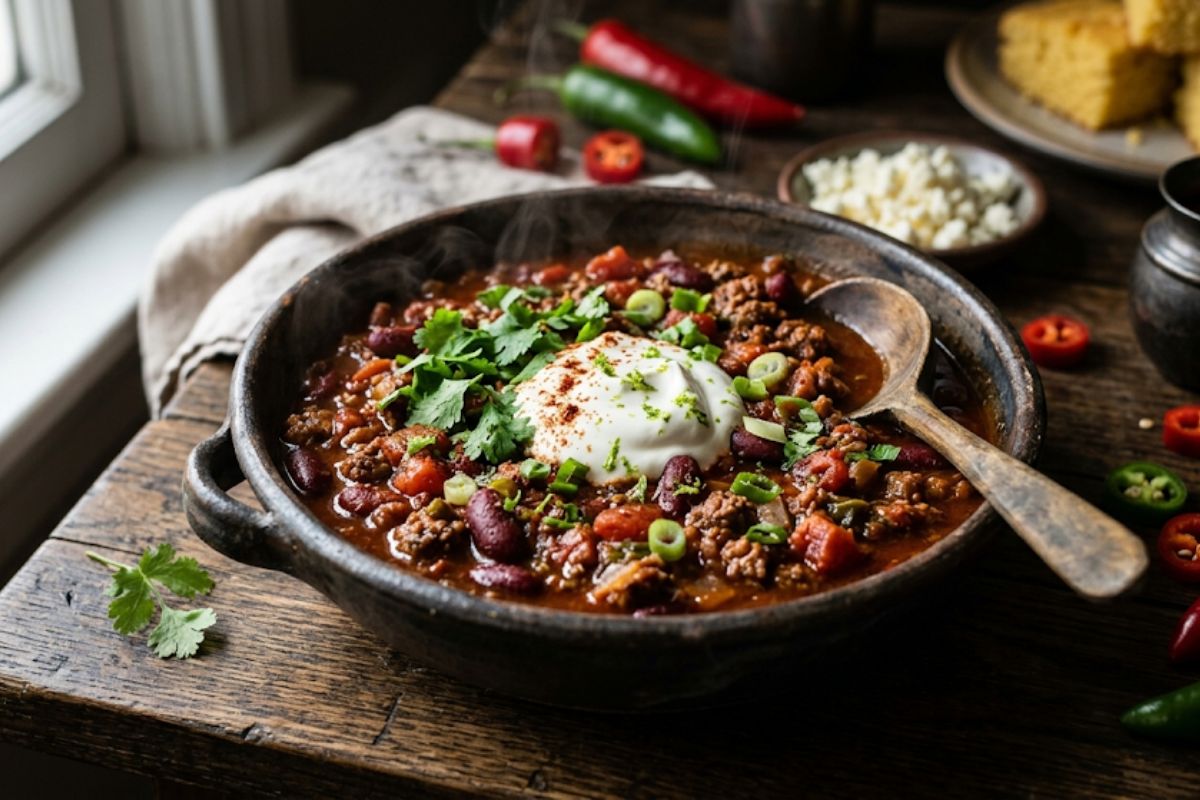
Chili Recipe lovers know that the perfect bowl combines rich flavors, hearty ingredients, and a comforting warmth that satisfies every craving. Whether you’re cooking for a family dinner or a cozy night in, this chili recipe delivers bold taste, simple steps, and irresistible aroma in every bite.
Chili Recipe (Overview Table)
| Attribute | Details |
| Recipe Name | Chili Recipe |
| Cuisine Type | American / Tex-Mex |
| Dish Category | Main Course |
| Preparation Time | 15–20 minutes |
| Cooking Time | 40–60 minutes |
| Total Time | Approximately 1 hour |
| Difficulty Level | Easy to Moderate |
| Serving Size | 4–6 servings |
| Calories per Serving | 250–400 kcal (varies by ingredients) |
| Main Protein | Ground beef / chicken / turkey / beans |
| Key Ingredients | Beans, tomatoes, chili powder, garlic, onion |
| Spice Level | Mild to Hot (adjustable) |
| Cooking Method | Stovetop / Slow Cooker / Instant Pot |
| Flavor Profile | Spicy, smoky, savory |
| Best Served With | Rice, cornbread, tortilla chips |
| Dietary Options | Vegetarian, vegan, gluten-free adaptable |
| Storage | Refrigerate up to 4 days |
| Freezing Option | Yes, freeze up to 3 months |
| Reheating Method | Stovetop or microwave |
| Popular Variations | Texas chili, white chicken chili, vegetarian chili |
Chili Ingredients
- Ground beef (or turkey/chicken) for a rich, hearty protein base
- Kidney beans for classic texture and fiber content
- Black beans for added depth and creaminess
- Crushed tomatoes for a thick, flavorful base
- Tomato paste to intensify richness and color
- Onion (finely chopped) for aromatic sweetness
- Garlic (minced) to enhance bold flavor
- Green bell pepper for freshness and crunch
- Red bell pepper for a slightly sweet balance
- Chili powder as the signature spice blend
- Cumin for warm, earthy undertones
- Paprika (smoked or regular) for depth and mild heat
- Oregano for a subtle herbal note
- Salt to enhance overall flavor
- Black pepper for mild heat and balance
- Cayenne pepper for extra spiciness (optional)
- Olive oil for sautéing ingredients
- Beef or vegetable broth for a rich, simmered consistency
- Corn kernels for a touch of sweetness and texture
- Fresh cilantro (chopped) for garnish and freshness
Step-by-Step Instructions for Making Chili
- Heat olive oil in a large pot over medium heat until it shimmers, ensuring the base is ready for even cooking.
- Add finely chopped onions and sauté until soft and translucent, releasing their natural sweetness.
- Stir in minced garlic and cook briefly until fragrant, avoiding burning for the best flavor.
- Add ground beef (or preferred protein) and cook until browned, breaking it into small pieces for even texture.
- Drain excess fat if needed to keep the chili balanced and not overly greasy.
- Mix in chopped bell peppers and cook for 3–5 minutes until slightly tender.
- Stir in tomato paste and cook for a minute to deepen the flavor profile.
- Add crushed tomatoes and stir well to combine all ingredients evenly.
- Pour in beans (kidney and black beans), rinsed and drained, for added texture and nutrition.
- Sprinkle chili powder, cumin, paprika, oregano, salt, and black pepper, ensuring even distribution of spices.
- Add cayenne pepper if you prefer extra heat, adjusting to taste.
- Pour in beef or vegetable broth to achieve your desired consistency.
- Bring the mixture to a gentle boil, then reduce heat to low for slow simmering.
- Cover partially and let the chili simmer for 30–45 minutes, stirring occasionally to prevent sticking.
- Taste and adjust seasoning, adding more salt or spices as needed.
- Allow the chili to thicken naturally as flavors meld together during cooking.
- Stir occasionally to maintain a smooth, rich consistency.
- Turn off heat and let the chili rest for 5–10 minutes before serving.
- Garnish with fresh cilantro or preferred toppings like cheese or sour cream.
- Serve hot with rice, cornbread, or tortilla chips for a complete and satisfying meal.
Nutrition Facts for Chili
| Nutrient | Amount (Per Serving) |
| Calories | 300–350 kcal |
| Protein | 18–22 g |
| Total Fat | 12–18 g |
| Saturated Fat | 4–6 g |
| Unsaturated Fat | 7–10 g |
| Cholesterol | 40–60 mg |
| Carbohydrates | 25–35 g |
| Dietary Fiber | 7–10 g |
| Sugars | 5–8 g |
| Sodium | 600–900 mg |
| Potassium | 500–800 mg |
| Iron | 15–20% DV |
| Calcium | 6–10% DV |
| Vitamin A | 10–15% DV |
| Vitamin C | 15–25% DV |
| Vitamin B6 | 10–15% DV |
| Vitamin B12 | 15–25% DV |
| Magnesium | 10–15% DV |
| Zinc | 10–20% DV |
| Folate | 15–20% DV |
Chili Substitutions
- Swap ground beef with ground turkey for a leaner chili option
- Use shredded chicken instead of beef for a lighter, protein-rich variation
- Replace meat entirely with lentils for a hearty vegetarian chili
- Substitute kidney beans with black beans for a smoother texture
- Use pinto beans instead of kidney beans for a creamier consistency
- Replace crushed tomatoes with fresh diced tomatoes for a lighter base
- Use tomato sauce instead of crushed tomatoes for a smoother chili
- Swap tomato paste with ketchup in a pinch for added sweetness and tang
- Replace onion with shallots for a milder, slightly sweet flavor
- Use garlic powder instead of fresh garlic for convenience
- Substitute bell peppers with poblano peppers for a deeper, smoky taste
- Replace chili powder with taco seasoning for a quick spice blend
- Use smoked paprika instead of regular paprika for enhanced smokiness
- Substitute cumin with coriander for a slightly citrusy flavor twist
- Replace cayenne pepper with red pepper flakes for adjustable heat
- Use vegetable broth instead of beef broth for a vegetarian-friendly chili
- Swap olive oil with avocado oil for a higher smoke point
- Replace white sugar (if used) with honey or maple syrup for natural sweetness
- Use quinoa instead of beans for a protein-packed, grain-based chili
- Substitute sour cream topping with Greek yogurt for a healthier alternative
Tips for Making Chili
- Choose high-quality ingredients to build a rich and flavorful chili base.
- Brown the meat properly to develop deep, savory flavors.
- Sauté onions and garlic first to enhance aroma and taste.
- Use a blend of spices instead of relying on just one for complexity.
- Toast spices briefly to unlock their full flavor potential.
- Add tomato paste early and cook it to intensify richness.
- Balance flavors with a touch of sweetness if the chili tastes too acidic.
- Simmer the chili slowly to allow flavors to fully develop.
- Stir occasionally to prevent sticking and ensure even cooking.
- Adjust spice levels gradually to suit your taste preference.
- Use broth instead of water for a deeper, more robust flavor.
- Let the chili rest before serving to enhance overall taste.
- Make chili a day ahead for even better flavor the next day.
- Add beans later in the cooking process to maintain their texture.
- Use fresh herbs like cilantro for a bright finishing touch.
- Experiment with different proteins for unique variations.
- Control thickness by adjusting liquid or simmering time.
- Add a splash of vinegar or lime juice to brighten flavors.
- Include smoky elements like smoked paprika for depth.
- Taste and adjust seasoning multiple times during cooking.
- Avoid overcrowding the pot to ensure even cooking.
- Use a heavy-bottomed pot for consistent heat distribution.
- Customize toppings like cheese or yogurt for added texture.
- Store leftovers properly to maintain freshness and flavor.
- Freeze extra chili for quick and convenient future meals.
How to Store Chili
| Storage Method | Details |
| Cooling Before Storage | Allow chili to cool to room temperature before storing to prevent condensation and spoilage |
| Refrigeration Time | Store chili in the refrigerator for up to 3–4 days safely |
| Freezing Duration | Freeze chili for up to 2–3 months for best quality |
| Storage Containers | Use airtight containers to maintain freshness and prevent odor absorption |
| Portioning | Divide into smaller portions for easy reheating and minimal waste |
| Glass vs Plastic | Use glass containers for better durability and odor resistance |
| Sealing | Ensure lids are tightly sealed to avoid contamination |
| Labeling | Label containers with date to track freshness |
| Avoid Repeated Cooling | Do not repeatedly cool and reheat chili to maintain quality |
| Freezer Bags | Use heavy-duty freezer bags for space-saving storage |
| Remove Air | Remove excess air from bags to prevent freezer burn |
What Is Chili ?
Chili is a hearty and flavorful dish typically made with a combination of meat, beans, tomatoes, and a rich blend of spices. Known for its bold taste and comforting warmth, chili is a popular meal enjoyed across many cultures worldwide.
Originating from North America, chili has evolved into numerous variations, including vegetarian and regional styles. Its versatility allows for endless ingredient combinations, making it a customizable dish suited for different dietary preferences, spice levels, and cooking methods.
Health Benefits of Chili
- Supports muscle growth with its high protein content
- Enhances digestion due to fiber-rich beans and vegetables
- Boosts metabolism with naturally spicy ingredients
- Helps in weight loss by promoting fullness and reducing hunger
- Strengthens the immune system with vitamins and antioxidants
- Improves heart health by supporting healthy cholesterol levels
- Provides sustained energy from balanced macronutrients
- Rich in iron, helping prevent fatigue and anemia
- Supports healthy blood circulation throughout the body
- Contains antioxidants that protect cells from damage
- Helps regulate blood sugar levels when made with legumes
- Promotes gut health by feeding beneficial bacteria
- Supports brain function with essential nutrients like B vitamins
- Aids in reducing inflammation with natural spices
- Helps maintain healthy skin with vitamin-rich ingredients
- Supports bone strength with minerals like calcium and magnesium
- Encourages healthy metabolism and calorie burning
- Provides potassium for proper nerve and muscle function
- Helps detoxify the body with nutrient-dense ingredients
- Supports hormone balance through balanced nutrition
- Helps reduce unhealthy cravings due to its filling nature
- Promotes hydration when consumed with broth-based chili
- Supports immune defense with zinc and vitamin C
- Helps maintain healthy blood pressure levels
- Offers plant-based nutrition in vegetarian versions
- Encourages portion control due to its hearty texture
- Supports digestive enzyme activity with spices
- Helps improve mood with warm and satisfying flavors
- Can be adapted for low-fat, high-protein diets
- Contributes to overall health with a balanced nutrient profile
Side Effects of Eating Chili
- May cause heartburn, especially in individuals sensitive to spicy foods
- Can trigger acid reflux in people with digestive issues
- May irritate the stomach lining when consumed in excess
- Can lead to indigestion or discomfort after heavy consumption
- May cause bloating in some individuals
- Can increase body heat and sweating due to capsaicin
- May irritate the mouth and throat if extremely spicy
- Can cause burning sensation in the digestive tract
- May worsen symptoms of gastritis
- Can trigger irritable bowel syndrome (IBS) symptoms in sensitive individuals
- May lead to diarrhea if consumed in large quantities
- Can cause nausea in those unaccustomed to spicy foods
- May irritate hemorrhoids or worsen symptoms
- Can disrupt sleep if eaten late at night due to acidity
- May cause temporary loss of appetite in some cases
- Can lead to dehydration if not balanced with fluids
- May interact poorly with certain medications for acid control
- Can cause skin irritation if handled without care (chili peppers)
- May trigger allergic reactions in rare cases
- Can increase stomach acid production
- May cause discomfort for people with ulcers
- Can lead to burning sensation during bowel movements
- May aggravate existing digestive conditions
- Can cause excessive sweating and flushing
- May impact taste sensitivity temporarily
- Can irritate the nasal passages if very spicy
- May cause cramps or abdominal pain in sensitive individuals
- Can lead to overconsumption of calories if paired with heavy ingredients
- May affect oral health if consumed excessively with acidic bases
- Can create dependency on spicy foods for flavor satisfaction
Chili Recipe Notes
| Note | Details |
| Ingredient Quality | Use fresh, high-quality ingredients for the best flavor and texture |
| Meat Selection | Choose lean ground meat to reduce excess grease |
| Vegetarian Option | Substitute meat with beans, lentils, or plant-based protein |
| Spice Balance | Adjust spices gradually to control heat and flavor intensity |
| Chili Powder Choice | Use a good-quality chili powder blend for authentic taste |
| Cooking Base | Always sauté onions and garlic first for a strong flavor base |
| Tomato Base | Use crushed tomatoes for a thicker consistency |
| Simmer Time | Longer simmering enhances depth and richness of flavor |
| Consistency Control | Add broth to thin or simmer longer to thicken chili |
| Bean Preparation | Rinse canned beans to reduce sodium and improve taste |
| Layering Flavors | Add spices in stages for better flavor development |
| Heat Level | Customize spiciness with cayenne or fresh chilies |
| Resting Time | Let chili rest before serving to allow flavors to settle |
| Next-Day Taste | Chili often tastes better the next day after flavors meld |
| Storage Tip | Store in airtight containers for freshness |
| Freezing Tip | Freeze in portions for easy future meals |
| Reheating Tip | Reheat slowly and add liquid if needed |
| Garnishing | Top with cilantro, cheese, or yogurt for added flavor |
| Serving Suggestions | Serve with rice, bread, or tortilla chips |
| Experimentation | Feel free to try different proteins, beans, and spices for variety |
Conclusion on Chili Recipe
Chili Recipe is a timeless comfort dish that combines rich flavors, hearty ingredients, and simple cooking techniques to create a satisfying meal. Its versatility allows you to customize ingredients, spice levels, and textures, making it perfect for any occasion or dietary preference.
Whether you prefer a classic meat-based version or a plant-based alternative, chili remains a nutritious and filling option. With proper preparation and storage, this flavorful dish can be enjoyed fresh or later, delivering consistent taste, warmth, and wholesome goodness.
FAQs About Chili Recipe
1. What is the best meat to use in a chili recipe?
Ground beef is the most popular choice, but you can also use turkey, chicken, or even plant-based alternatives depending on your preference.
2. Can I make chili without beans?
Yes, you can make chili without beans, especially in Texas-style chili, which focuses mainly on meat and spices.
3. How can I make my chili thicker?
Simmer it longer uncovered, add tomato paste, or mash some beans to naturally thicken the consistency.
4. How do I reduce the spiciness of chili?
Add dairy like yogurt or cream, include more tomatoes, or balance with a bit of sugar to reduce heat.
5. Can I prepare chili in advance?
Yes, chili tastes even better the next day as the flavors deepen and blend together.
6. What are the best toppings for chili?
Popular toppings include cheese, sour cream, cilantro, green onions, and crushed tortilla chips.
7. How long should chili be cooked?
Chili should simmer for at least 30–45 minutes, but longer cooking enhances flavor significantly.
8. Can I freeze chili?
Yes, chili freezes well for up to 2–3 months when stored in airtight containers.
9. Is chili a healthy meal?
Chili can be very nutritious, especially when made with lean protein, beans, and vegetables.
10. What can I serve with chili?
Chili pairs well with rice, cornbread, baked potatoes, or tortilla chips for a complete meal.